
May 27, 2026
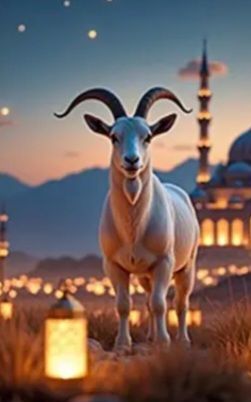
Eid al Kebir (also called Eid ul Adha in other parts of Islam) is the biggest holiday on the Islamic calendar.
This “Festival of Sacrifice” lasts for three to four days and commemorates Prophet Ibrahim’s willingness to sacrifice his son for Allah.
Tourists are told that all shops, and restaurants will be closed for three days. Sharon and I were prepared to hunker down and observe this festival from the outside, as we did during Ramadan earlier this year. This time we got lucky.
In my preceding blog Safi, Morocco I described how we got invited to join a family for this event.
Warning ⚠️
So, I have sought to create a respectful and realistic description of this holy festival. Some may want to skip the orange text.
Moroccan culture
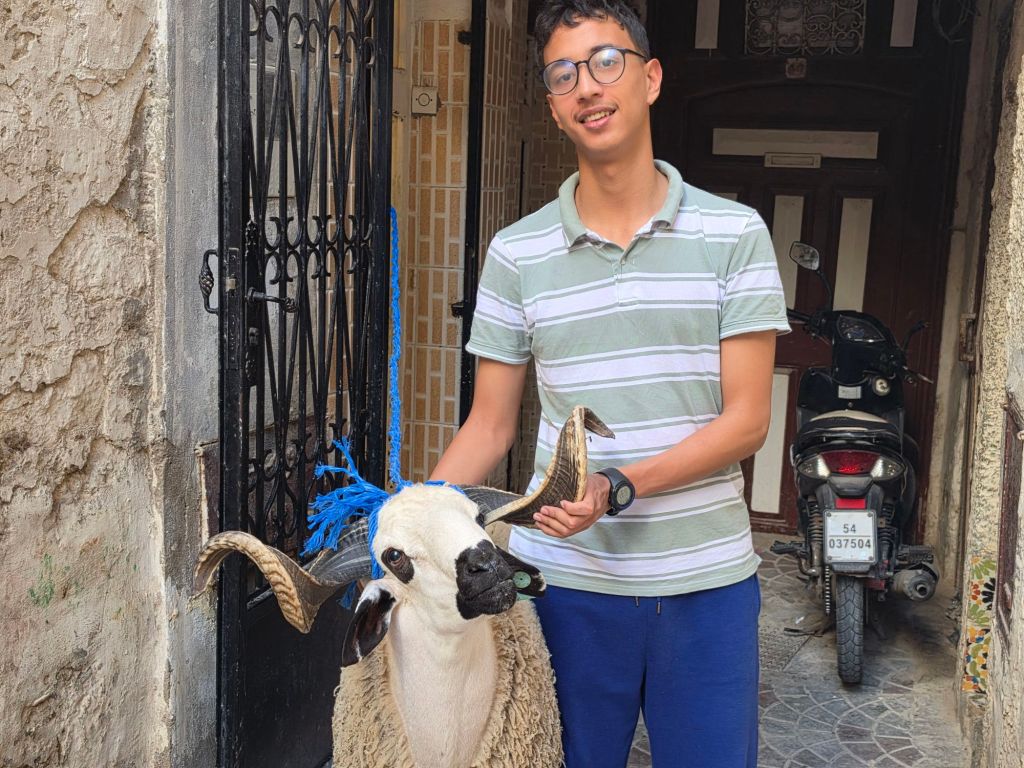
The festival starts with early morning prayer in a community space. Later that day each family slaughters a sheep. This is usually done in the family home with the help of a traveling specialist called a gazzar. He will ensure a clean kill.
For me, an outsider it is quite an affair to witness. Two men wrestle the animal to the floor and slit the throat. The animal dies in minutes. It is skinned and dressed. Then the gazzar moves on to the next home, leaving the owner of the sheep to continue the preparation.
Across Morocco, this occurs 6 or 7 million times on this one . The King of Morocco himself will sacrifice à sheep live on television.
So, the Muslim world has normalized this ritual. For me, this is the first time I’ve witnessed slaughter of a large animal. So, it was an eye opener.
It was understandable that Sharon did not want to witness it. I am surprised that young children of this culture are present and do not seem to flinch.
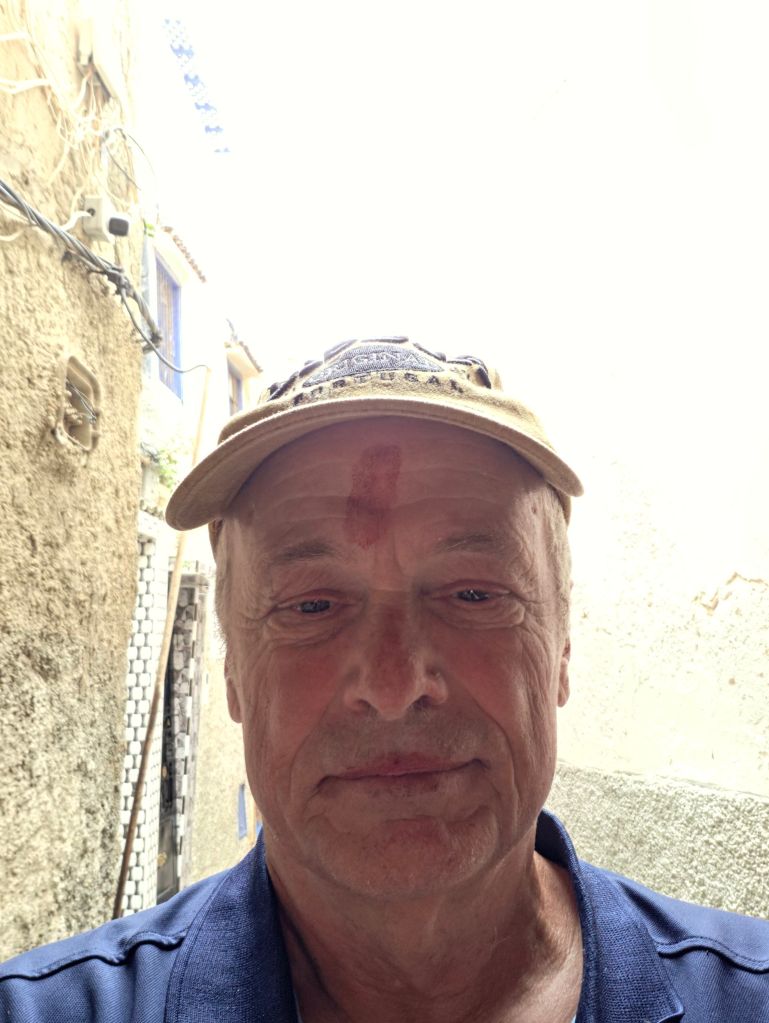
Once the animal was dead and lying in a pool of blood, Nour reached down and dipped his thumb in the blood. He then pressed his thumb to my forehead leaving a red smudge. This he said, will give me protection from accidents.
It would be wrong to portray this as cruel thing in any way. In the US, most of us are carnivores. The fact that slaughter is done for us in place we never go, should not make it somehow morally better.
I was allowed to take photos of the process, but I do not publish them here, out of respect for the culture.
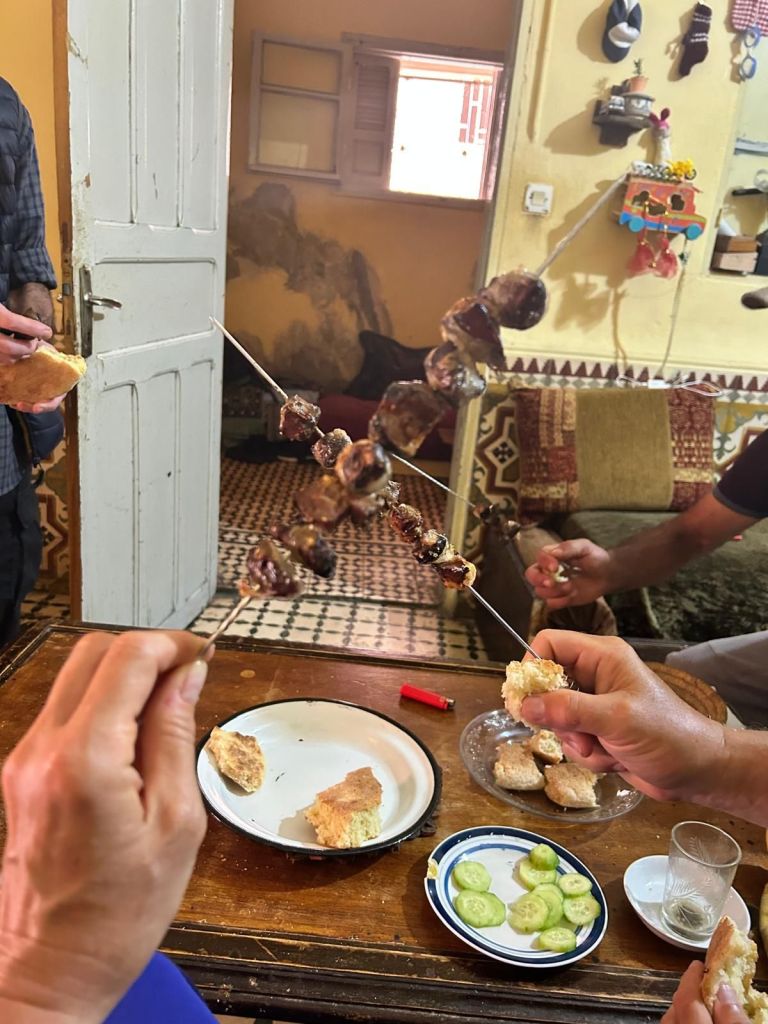
One sheep yields a lot of meat. The Moroccans use nearly the entire animal. Internal organs are tasty when prepared with the right spices. We most enjoyed the kebabs that were roasted over charcoal.
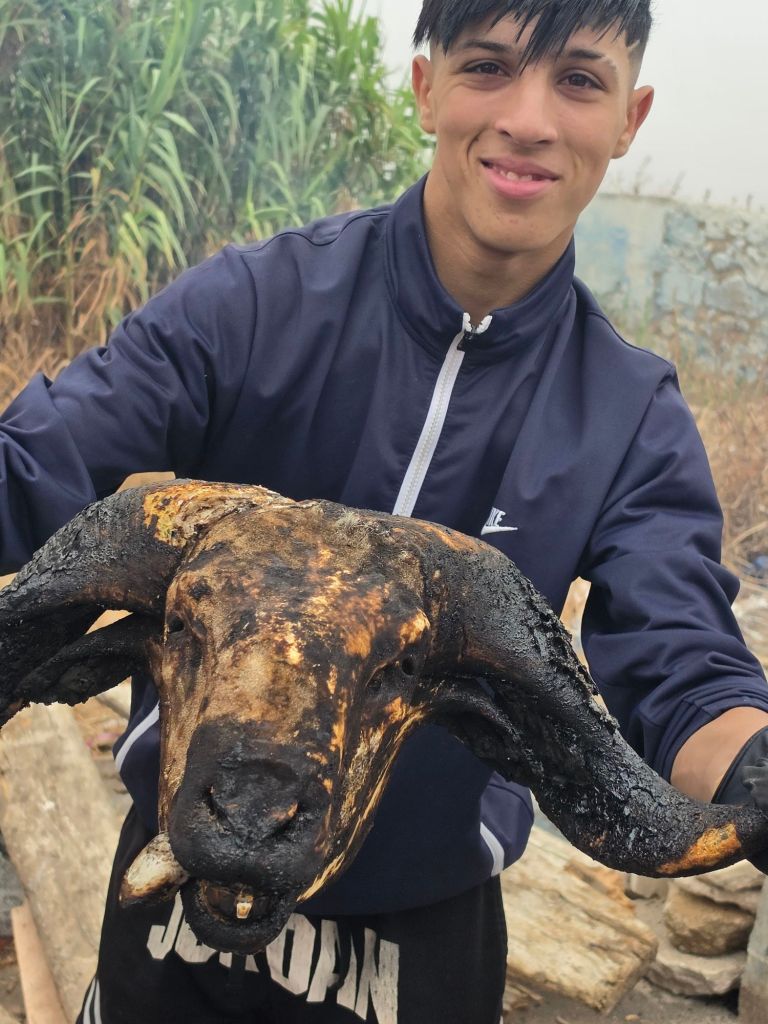
The sheep heads are served for breakfast on the day after. The entire skull is slow roasted on a wood fire over night. The skins are piled up in the street. Later on, someone collects them for processing into leather.
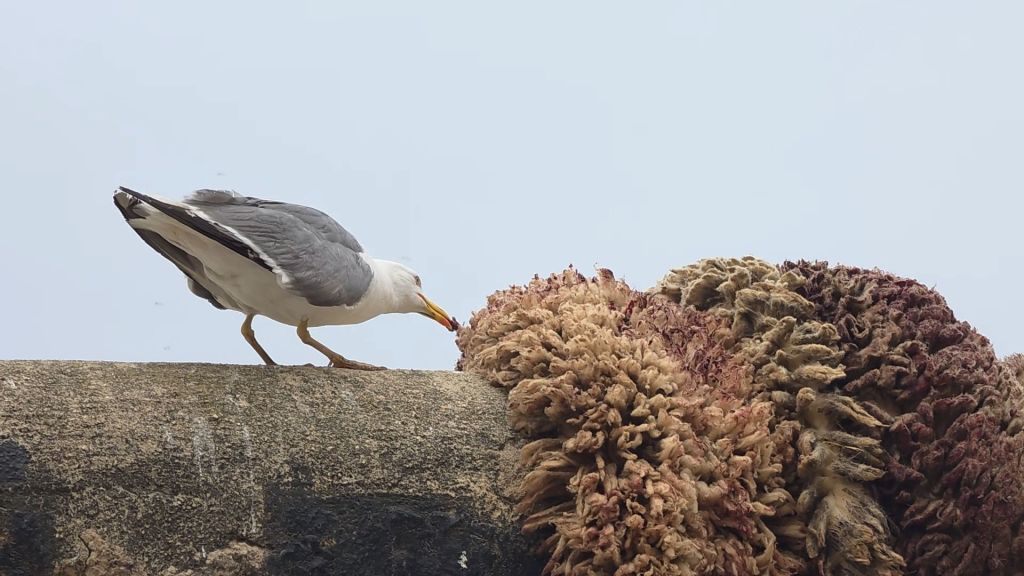
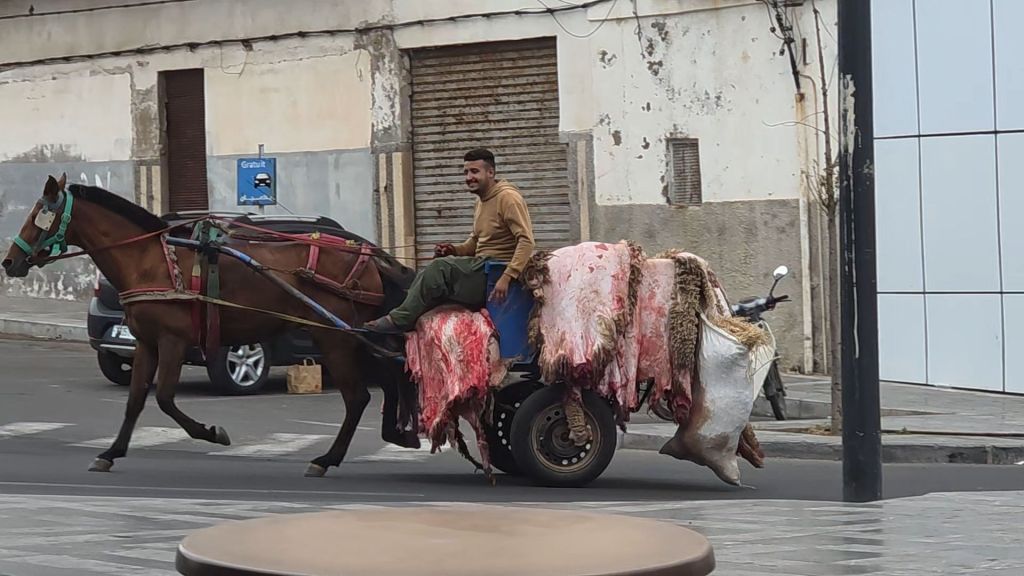
It is Muslim custom to contribute one quarter of the food to the poor. The atmosphere in the streets is very open and friendly. There is a lot of sharing.
The following morning in Safi, it is the custom that children spray water onto people in the street. This is done in a way that is part mischievous and part blessing.
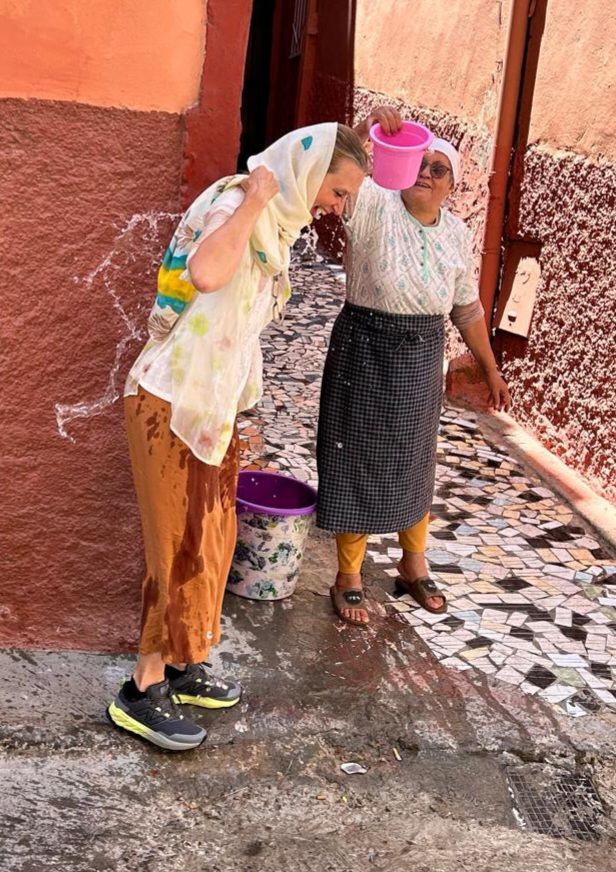
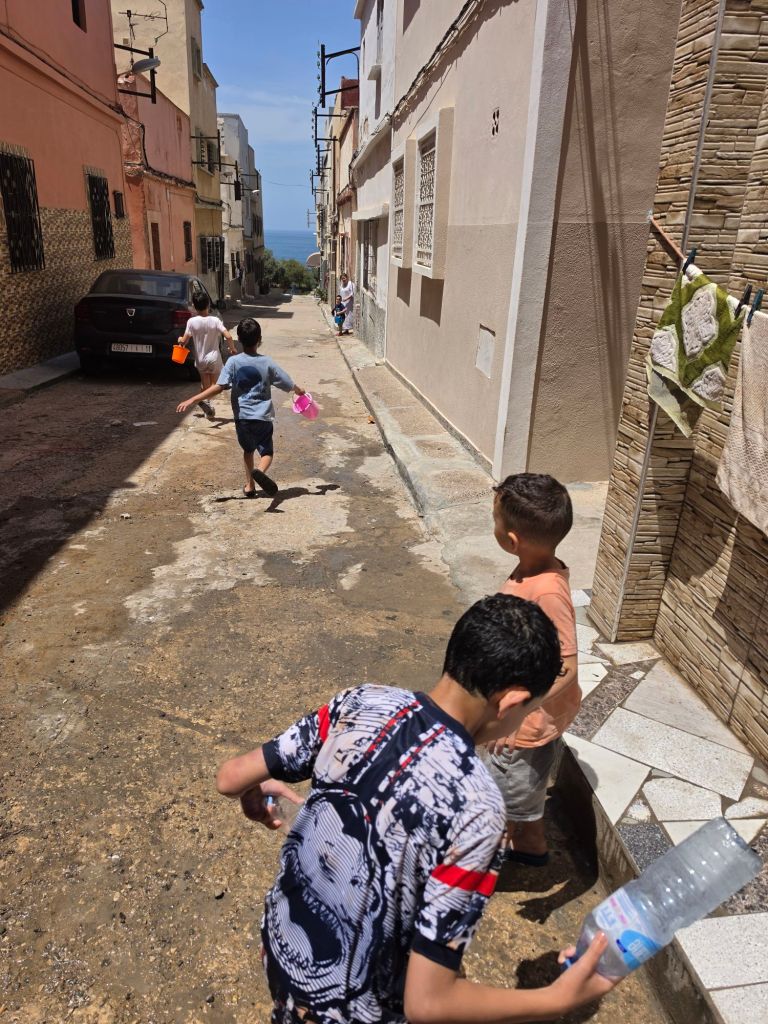
Though we were warned that sometimes the kids go too far, and mix saffron in the water. This can stain your clothes. There is no effort to control this. The best advice is to stay out of the street until afternoon.
Our Host
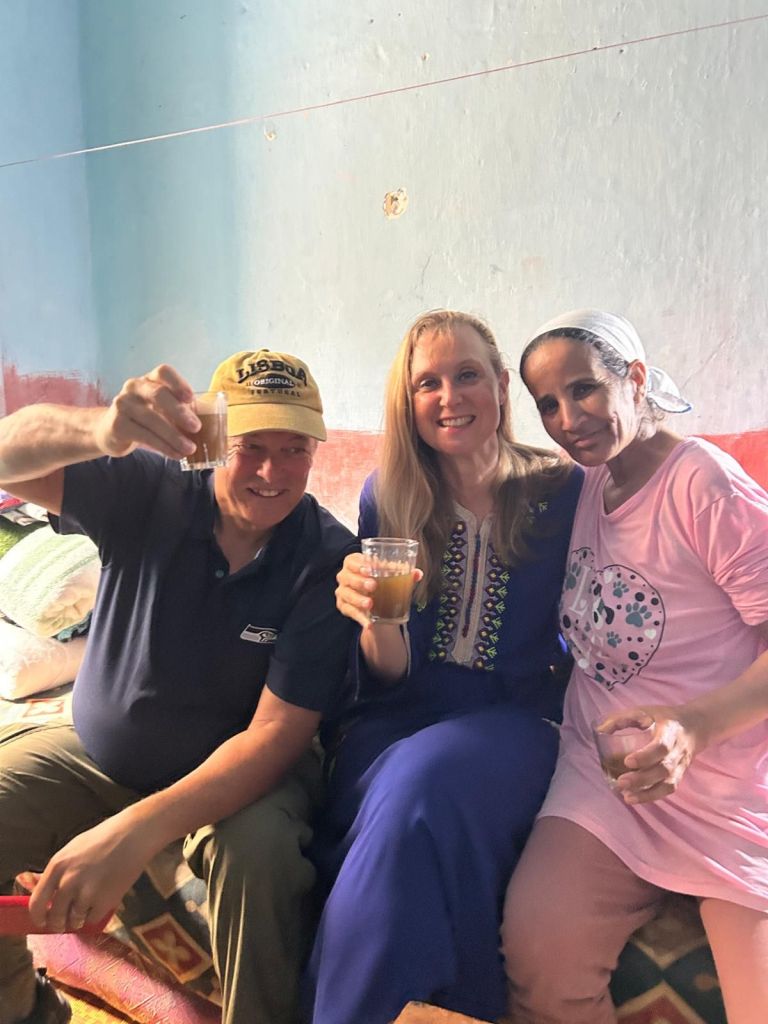
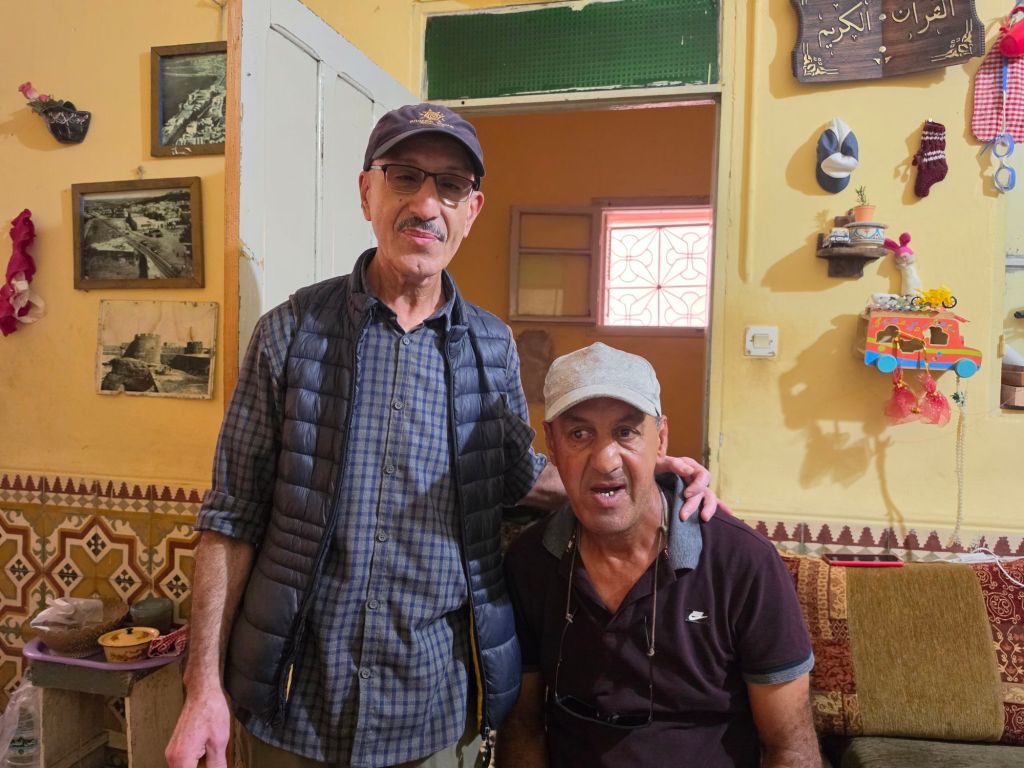
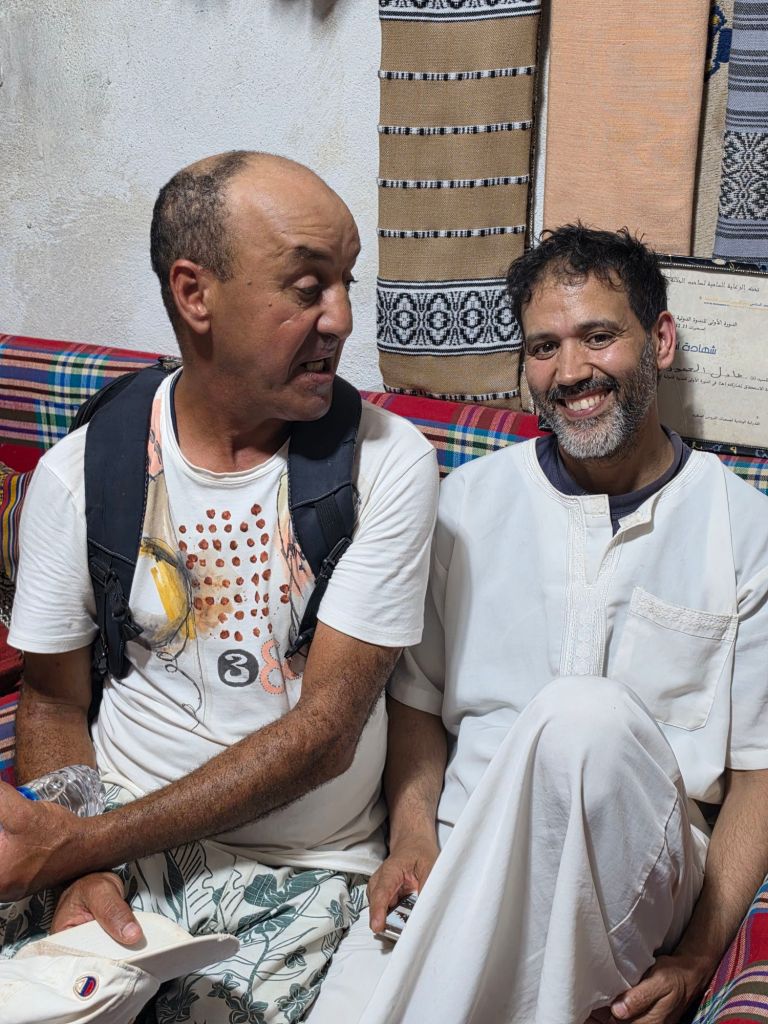
Nour Eddine was very happy to have us in his home. To be with his wife, Alisha, his daughter, Zeheer, and so many other friends and relatives we met in his community, was a real treat for us.
We had a wonderful view of the life here, from the inside. We would not have otherwise understood the significance of what was happening all around us.
It is good to have such a good friend in Morocco. As a gift, I set up my backup phone for him to have. In this way, we can stay in touch. I think he will adapt to it. He has lots of friends that can help.


Tim and Sharron:
It was very nice of your host to include you. Glad you had an
interesting trip.
LikeLike
Tim and Sharron:
What an experience to see every day life of the people. You certainly have a talent to get accepted by the locals and blend in. Thanks for the photos and story.
Jon H
LikeLike